Wondering whether Pittsburgh investment properties are actually practical for a small buy-and-hold strategy? You are not alone. If you are trying to sort through rents, property types, and return metrics without getting lost in jargon, this guide will help you build a clearer framework for evaluating deals in Pittsburgh. Let’s dive in.
Why Pittsburgh Draws Investors
Pittsburgh stands out as a practical market for many small investors because the rental market is relatively balanced and the housing stock still includes a lot of smaller-scale properties. According to HUD’s Pittsburgh housing market analysis, the overall rental vacancy rate was estimated at 8.6% and the apartment vacancy rate at 6.5% as of May 1, 2024.
That same report puts average apartment rent at $1,313. It also notes that single-family and 2 to 4 unit rentals make up 55% of the rental housing stock, which matters if you are focused on entry-level rental investing instead of large apartment complexes.
The big takeaway is simple: Pittsburgh can offer useful options for buy-and-hold investors, but the numbers need to work on a property-by-property basis. A solid investment here usually starts with the right building, realistic rent assumptions, and a full view of operating costs.
Common Pittsburgh Property Types
Pittsburgh gives you several property types to consider, and each one comes with a different risk, management style, and pricing dynamic. Your best fit depends on your budget, experience, and goals.
Single-family rentals
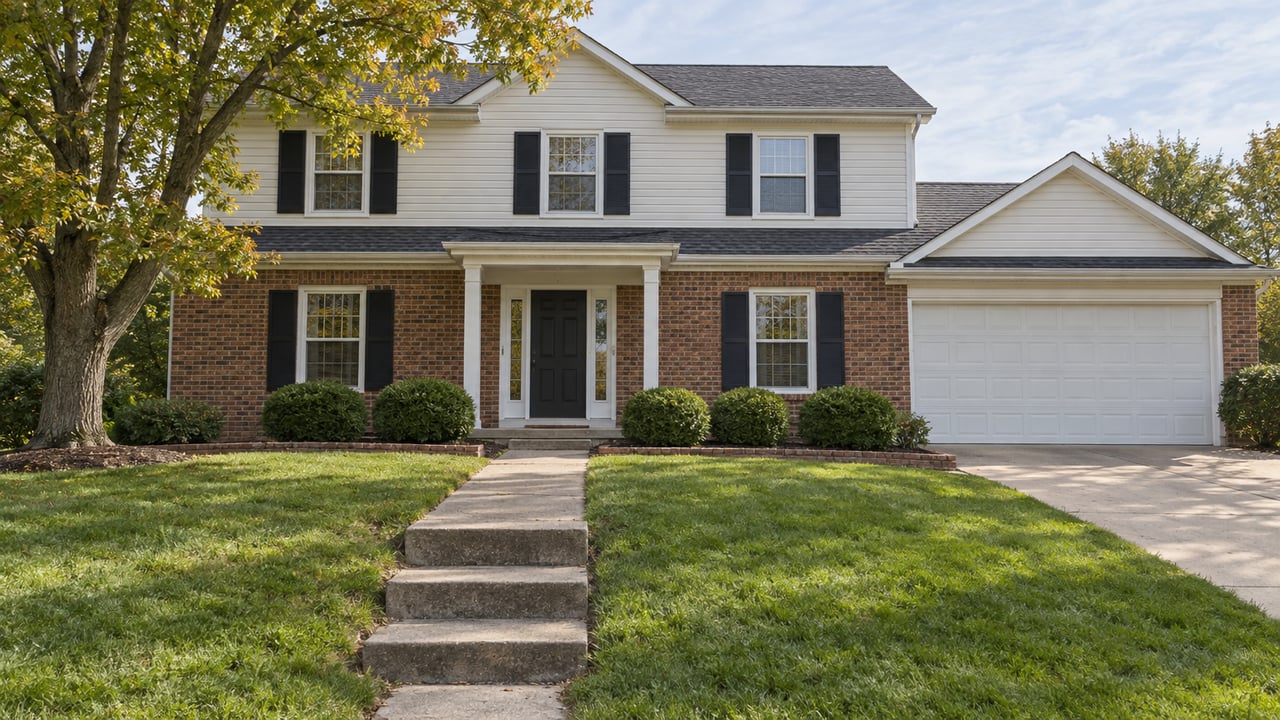
Single-family rentals remain a major part of the local market. HUD found that 38% of renter households in the Pittsburgh HMA lived in attached or detached single-family homes in 2022.
For a newer investor, a single-family home can feel more familiar and easier to manage. On the other hand, vacancy risk is concentrated in one unit, so your income stream can stop completely when the property is empty.
Duplexes and small multis
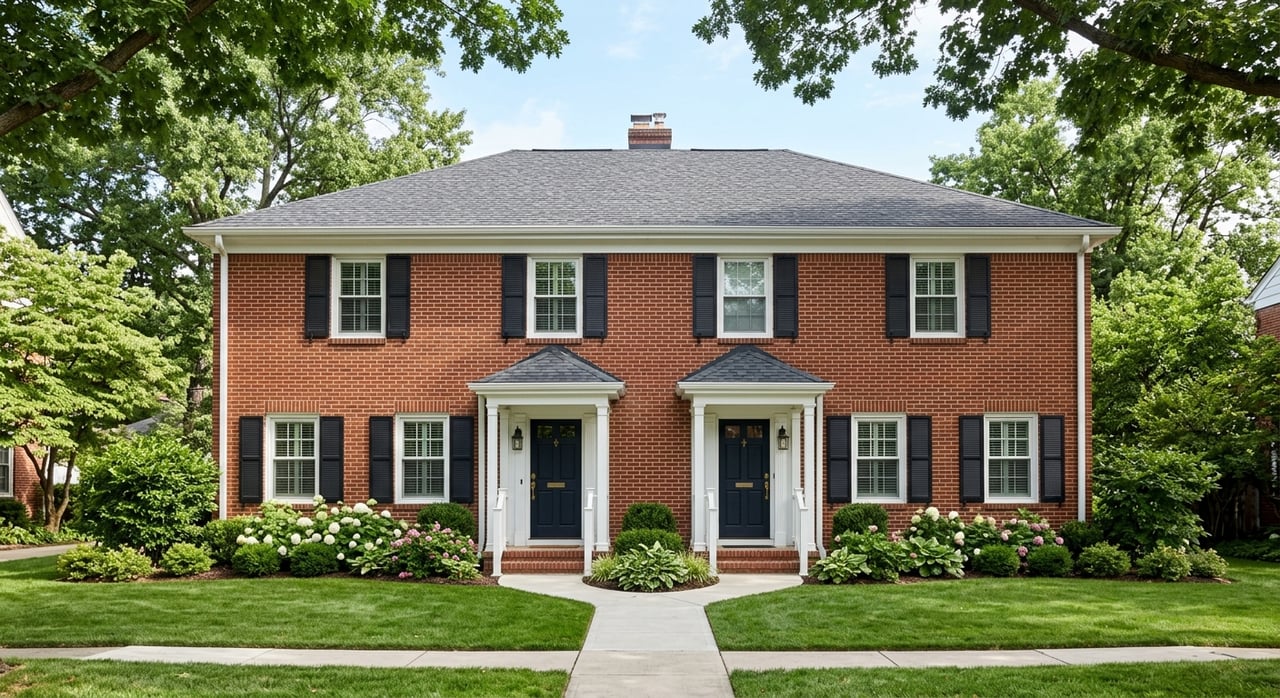
Duplexes, triplexes, and fourplexes are a meaningful part of Pittsburgh’s rental landscape. Census definitions for 2 to 4 unit properties help clarify the category, and the research report shows that 2 to 4 unit rentals made up 19% of occupied rental units in 2022.
These properties can appeal to investors who want multiple income streams without jumping straight into a larger apartment building. If one unit is vacant, the others may still help cover expenses.
Small apartment buildings
If you are looking at 5-plus unit properties, neighborhood-specific analysis becomes even more important. HUD estimated that 40% of occupied rental units were in 5+ unit multifamily structures in 2022.
With this property type, citywide rent averages become less useful on their own. Rent comps, unit mix, building condition, and local competition tend to drive value more than broad metro averages.
Condos and townhomes
Condos and townhomes are also part of the practical investor conversation in Pittsburgh. Major rental platforms such as Apartments.com’s Pittsburgh rent trends page break out categories like condos, townhomes, houses, and apartments.
These can be attractive if you want a lower-maintenance exterior or a location that fits a specific renter profile. Still, you need to verify dues, rules, and actual rent comps before assuming the numbers work.
What Pittsburgh Rents Look Like
One of the easiest mistakes investors make is relying on a single rent number for the whole city. In Pittsburgh, that can lead to trouble quickly because rent varies a lot by neighborhood, unit type, and building condition.
As of April 17, 2026, Zillow’s Pittsburgh rent data showed an average rent of $1,500 across property types, with about $1,250 for a 1-bedroom and $1,530 for a 2-bedroom. Apartments.com reported an overall average of $1,422, with about $1,422 for a 1-bedroom and $1,689 for a 2-bedroom.
Those numbers do not match exactly, and that is normal. Different platforms pull from different datasets and unit mixes, which is why it is safer to treat public rent data as a range rather than a fixed answer.
A practical starting point is this: common 1-bedroom and 2-bedroom rents in Pittsburgh often fall in the low- to mid-$1,000s, while larger units and premium submarkets can go much higher. HUD’s 2024 report adds another benchmark, showing average apartment rent at $1,313 and average single-family rental rents of $1,171 for 1-bedroom homes, $1,221 for 2-bedroom homes, $1,506 for 3-bedroom homes, and $1,975 for 4-bedroom homes.
Why Neighborhood Comps Matter More
If you remember one thing from this article, make it this: neighborhood comps matter more than citywide averages. Pittsburgh is not a one-price market.
HUD’s 2024 analysis found average apartment rent at $1,748 in Downtown Pittsburgh and $1,526 in East Pittsburgh. Meanwhile, Apartments.com showed neighborhood averages ranging from under $1,100 in some areas to above $2,500 in others.
That spread is too wide to ignore. Before you buy, you should compare similar nearby rentals by unit size, condition, layout, and location instead of depending on one citywide figure.
Two Metrics Every Investor Should Know
If you are new to investment property analysis, two of the most useful screening tools are cap rate and cash-on-cash return. They answer different questions, and both can help you compare opportunities more clearly.
What is NOI?
Before either metric makes sense, you need to know NOI, or net operating income. Virginia Tech’s real estate glossary defines NOI as annual net income after operating expenses are subtracted from effective gross income.
Importantly, NOI does not include mortgage principal or interest. That means it measures the property’s operating performance before financing enters the picture.
What is cap rate?
Cap rate is the ratio of NOI to market value. In plain English, it helps you compare how much income a property produces relative to its price.
For example, if a building produces $12,000 of NOI and is worth $200,000, the cap rate is 6%. Cap rate is most useful when you want to compare the property itself, regardless of how it is financed.
What is cash-on-cash return?
Cash-on-cash return compares the cash received during a period with the original cash invested. In practical terms, it shows the return on the cash you actually put into the deal.
For example, if you invest $50,000 and receive $5,000 of annual cash flow after debt service, your cash-on-cash return is 10%. This is especially useful when you are comparing financed deals from your own equity perspective.
Use both, but do not stop there
Cap rate and cash-on-cash return are screening tools, not full underwriting tools. They do not replace a complete budget that includes vacancy, repairs, reserves, management, taxes, and financing terms.
That is why a promising listing should always lead to a deeper review. If the deal still works after you plug in realistic costs, then the opportunity becomes much more meaningful.
Pittsburgh Costs To Watch
Rental property math is not just about price and rent. In Pittsburgh, ownership costs and local compliance items can affect your returns more than many first-time investors expect.
Rental permit program
The City of Pittsburgh launched a Residential Housing Rental Permit Program in December 2024. According to the city’s June 6, 2025 page, compliance remained voluntary until further notice, and the 2025 fee schedule listed a $16 per-unit registration fee plus inspection fees.
If you are evaluating a property inside city limits, this is worth reviewing early. Rules, fees, and administrative steps can affect both your timeline and your operating budget.
Transfer tax
Closing costs can be significant, especially if you are buying in the City of Pittsburgh. The city states that the realty transfer tax totals 5% of the consideration paid, made up of 1% Commonwealth, 3% City of Pittsburgh, and 1% Pittsburgh School District.
If you are buying elsewhere in Allegheny County, do not assume the city rate applies. Local transfer tax rates can vary by municipality and school district.
Property taxes
Property taxes should also be part of your upfront analysis. The city’s real estate tax page explains that taxes are based on assessed value and calculated using the applicable millage rate.
Even a rough estimate is better than skipping this line item. Property taxes can materially change your projected return.
A Practical Way To Evaluate Deals
If you want a straightforward framework, start with the basics and build from there. You do not need a perfect spreadsheet on day one, but you do need realistic assumptions.
Here is a simple approach:
- Choose the right property type based on your budget, goals, and management comfort level.
- Estimate rent conservatively using neighborhood-specific comps, not just citywide averages.
- Subtract real operating costs such as taxes, repairs, reserves, registration fees, and possible vacancy.
- Calculate NOI to understand the property’s operating performance.
- Check cap rate and cash-on-cash return to see whether the numbers still make sense.
This process will not eliminate risk, but it can help you avoid emotional decisions. In a market like Pittsburgh, discipline matters.
How Nathaniel Nieland LLC. Can Help
If you are exploring Pittsburgh investment properties, local knowledge and financial clarity matter. A duplex in one part of the city can behave very differently from a single-family rental or condo in another, and neighborhood-level analysis often makes the difference between a workable deal and a frustrating one.
That is where a finance-minded, neighborhood-focused approach can add real value. When you are ready to talk through rental comps, property types, and a practical acquisition strategy in Pittsburgh or nearby western Pennsylvania suburbs, connect with Nathaniel Nieland LLC..
FAQs
What makes Pittsburgh investment properties appealing for buy-and-hold investors?
- Pittsburgh offers a relatively balanced rental market, a large supply of small-scale housing stock, and meaningful inventory across single-family homes, 2 to 4 unit properties, and multifamily rentals.
What rent range should you expect for Pittsburgh rental properties?
- Public data suggests many 1-bedroom and 2-bedroom Pittsburgh rentals fall in the low- to mid-$1,000s, but actual rents vary widely by neighborhood, unit type, and condition.
What is the difference between cap rate and cash-on-cash return for investment properties?
- Cap rate measures property income relative to value using NOI, while cash-on-cash return measures the return on the cash you actually invest after financing.
What Pittsburgh ownership costs should investors review before buying rental property?
- You should review transfer taxes, property taxes, possible rental registration and inspection costs, and standard operating expenses such as repairs, reserves, and vacancy.
Why do neighborhood comps matter so much for Pittsburgh rental property analysis?
- Pittsburgh rent levels can vary dramatically by submarket, so nearby comparable rentals usually provide a more accurate picture than a citywide average.